
Accept USDT (Tether) payments on WooCommerce
Stable, dollar-pegged crypto payments — a $50 order is still $50 when it settles.
Get the free pluginUSDT is the most-used cryptocurrency for real-world payments. It is a stablecoin pegged 1:1 to the US dollar, so accepting it removes the volatility problem of crypto entirely — the amount a customer pays is the amount you receive. For many merchants USDT is the single most important coin to support.
On a WooCommerce store, USDT solves the one objection that stops merchants accepting crypto: price risk. Because a USDT is always worth a dollar, you can price products normally and know the settled amount will match the order total. VelozaPay forwards every USDT payment on-chain to a wallet you control — across Tron, Ethereum, BNB Chain, Polygon or Solana — so you get stablecoin payments without handing custody to a processor or registering an account.
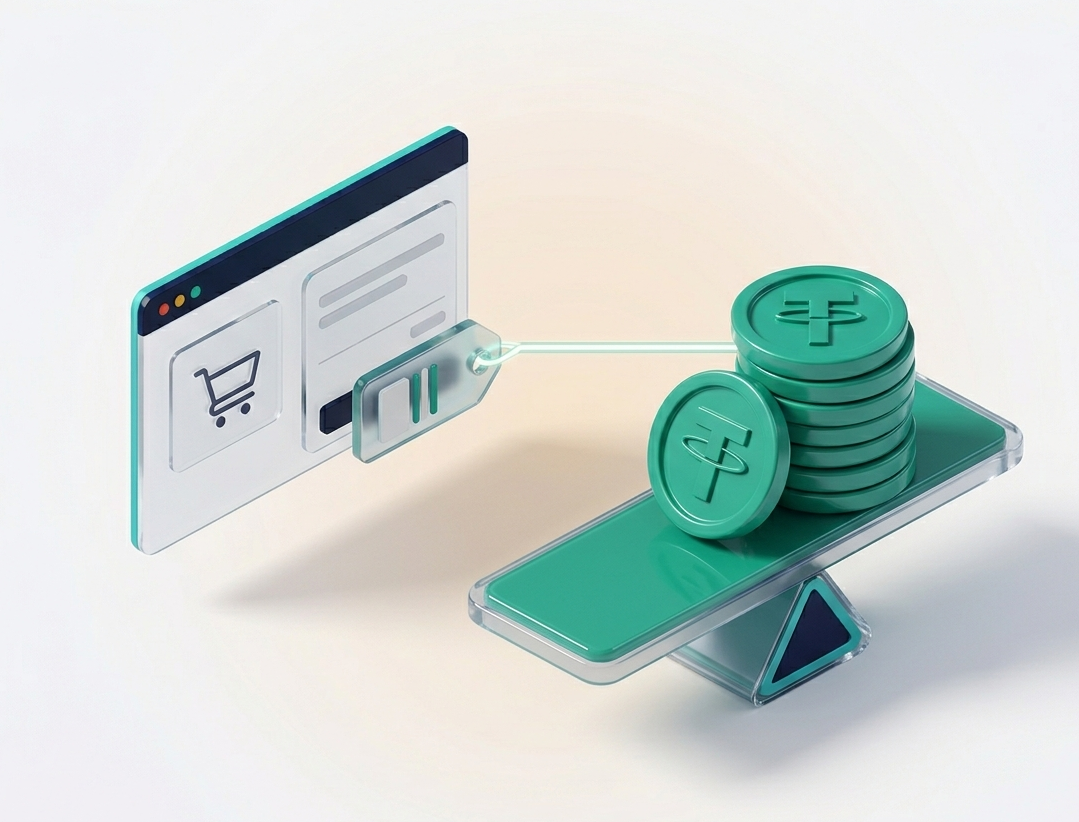
Why USDT
Why accept USDT on your store
No volatility
USDT tracks the US dollar. There is no price swing between checkout and settlement — what the customer pays is what lands in your wallet.
The #1 payment crypto
USDT moves more value than any other crypto. Customers — especially in regions with unstable local currencies — hold and spend it daily.
Low-fee networks
VelozaPay supports USDT across several chains so the customer can pick the cheapest one — Tron (TRC-20) fees are a fraction of a cent.
Payment gateway
How the VelozaPay USDT payment gateway works
USDT is a token rather than a base coin, so it lives on several blockchains at once. When a customer chooses USDT at checkout, the VelozaPay payment page lets them pick the network their funds are on — Tron, Ethereum, BNB Chain, Polygon or Solana — then shows a one-time address and QR code for that chain with the dollar amount fixed to your order total.
Once the USDT transfer is seen on the chosen network, it is forwarded straight to your matching wallet address and WooCommerce is notified over a REST callback. The order is marked paid automatically. You keep a wallet for each network you want to support, and the plugin routes every payment to the right one.
Customer picks the network
The payment page offers Tron, Ethereum, BNB Chain, Polygon and Solana — the customer pays from whichever chain holds their USDT.
Dollar amount, not coin amount
Because USDT tracks the US dollar, the figure the customer sends is the figure you priced — there is no conversion gap.
Routed to your wallet
Each network settles to the wallet address you set for it. VelozaPay never holds the USDT at any point.
How it works
USDT payments in three steps
- 1
Install the plugin
Add VelozaPay to WooCommerce and paste your USDT payout wallet — no account, no KYC.
- 2
Customer pays USDT
At checkout the customer picks USDT, scans the QR and sends the payment.
- 3
Order completes
The USDT settles on-chain to your wallet and the WooCommerce order is marked paid automatically.
USDT is supported on Tron (TRC-20), Ethereum (ERC-20), BNB Chain (BEP-20), Polygon and Solana. The customer chooses the network on the VelozaPay payment page.
Pricing
What it costs to accept USDT
The VelozaPay plugin is free, with no monthly fee and no setup cost — you pay only a small flat percentage on a transaction when a customer pays. For USDT that is especially efficient: a stablecoin payment has no spread or conversion loss, so the amount that reaches your wallet is predictable to the cent.
Network fees depend on the chain the customer picks. Tron (TRC-20) is usually the cheapest, often a fraction of a cent, while Ethereum can cost more at busy times — which is exactly why VelozaPay lets the customer choose. The customer pays that network fee; there is no payout fee or withdrawal delay on your side because the USDT settles directly to you.
Use cases
Stores that benefit most from USDT checkout
USDT suits any store that wants crypto payments without the price risk, and a few cases especially.
Dollar-priced catalogues
If your products are priced in USD, USDT settles at face value — no need to quote a moving crypto amount or absorb volatility.
Customers in unstable-currency regions
In many countries USDT is the everyday way people hold and spend dollars. Accepting it reaches buyers whose local cards or banking are unreliable.
Services, freelancers and B2B
Invoices and high-value orders settle for the exact amount agreed, which makes USDT practical for service businesses and wholesale.
Cross-border stores
USDT moves worldwide in minutes with no card-network borders or FX fees, so international customers pay the same way domestic ones do.
Comparison
VelozaPay vs other ways to accept USDT
How a non-custodial WooCommerce plugin compares with a custodial crypto processor and a card gateway.
| Feature | VelozaPay | Custodial processor | Card gateway |
|---|---|---|---|
| Holds your money | No — non-custodial | Yes — custodial | Yes, until payout |
| Price volatility | None — dollar-pegged | None — dollar-pegged | None |
| KYC / account approval | Not required | Required | Required |
| Networks offered | 5 — customer chooses | Varies | n/a |
| Chargebacks | Impossible | Impossible | Common |
| Settlement | Direct to your wallet | To a processor balance | 2–7 day payout |
FAQ
USDT payments — questions
Which USDT network is cheapest?
Tron (TRC-20) is the most popular and lowest-cost network for USDT payments. Polygon and BNB Chain are also very cheap. The customer picks the network at checkout.
Is USDT stable enough to accept?
USDT is pegged to the US dollar and is the most widely used stablecoin in the world. Because it does not fluctuate like Bitcoin, it is the safest crypto to price products in.
Does the customer choose the USDT network?
Yes. After placing the order they land on the VelozaPay payment page and pick the network they want to pay from — each one routes to your matching wallet.
What does it cost to accept USDT?
The plugin is free with no monthly fees. VelozaPay takes only a small flat percentage when a customer pays. The customer covers the network fee, which on Tron is usually a fraction of a cent.
Do I need a separate wallet for each USDT network?
You set a wallet address for each chain you want to support — one EVM 0x address covers Ethereum, BNB Chain and Polygon, while Tron and Solana use their own address formats. The plugin routes each payment to the right one.
Is there a minimum USDT order amount?
Very small USDT payments can be uneconomical once the network fee is counted, especially on Ethereum. Live per-coin and per-network minimums are listed on the minimum order amounts page.
Do my customers need an account to pay with USDT?
No. Customers pay from their own wallet on the payment page — there is no sign-up, no ID check and no account on either side of the payment.
Keep reading


Start accepting USDT today
Install the free plugin, add your wallet, take your first USDT payment this afternoon.
Get the free plugin